
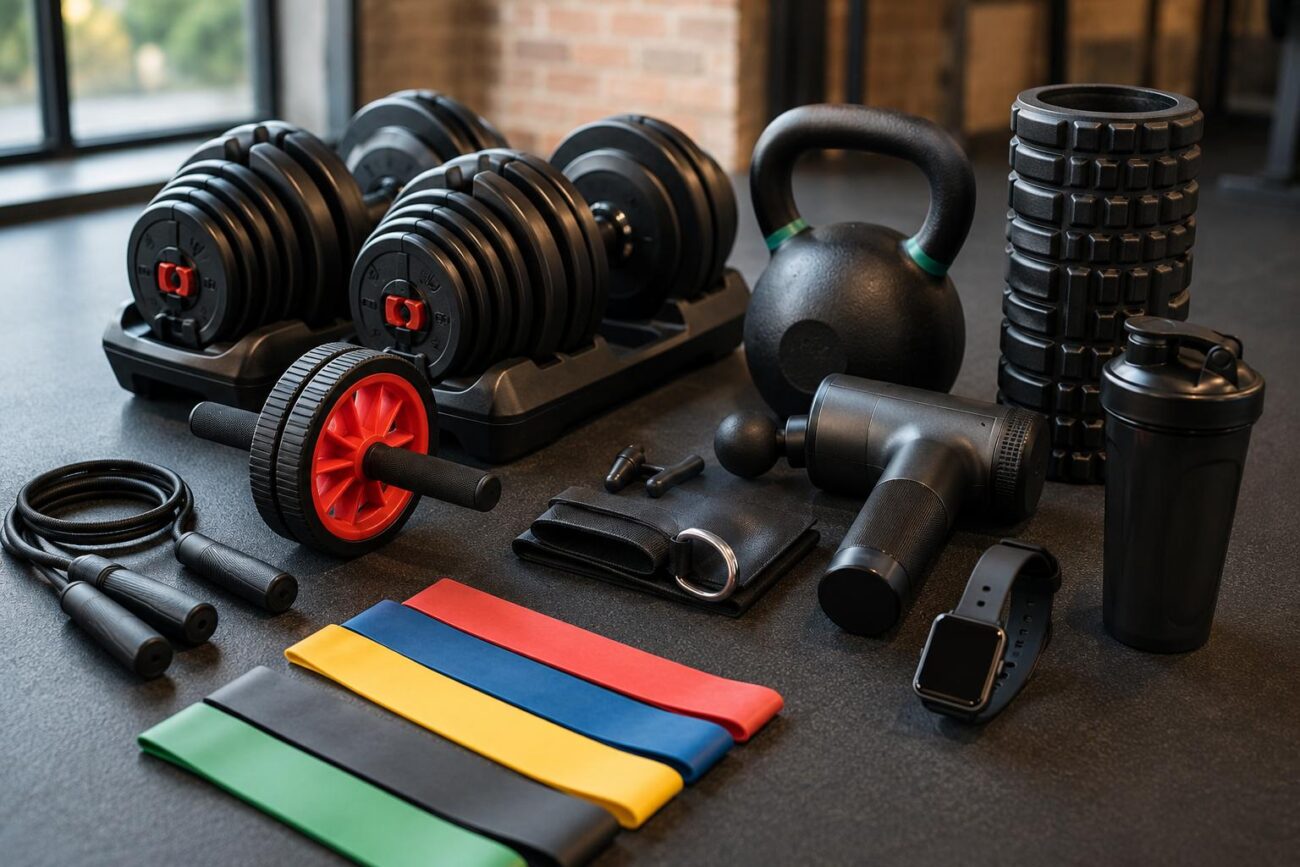
Setting up a home gym doesn’t mean buying every piece of equipment available. The best setup depends on your fitness goals, available space, experience level, and budget.
A few well-chosen pieces of equipment can be more useful than a room full of products you rarely use. Current home-gym buying guides similarly recommend choosing equipment around your actual fitness goal and starting with versatile essentials rather than buying everything at once.
1. Start With Your Fitness Goal
First decide what you want to achieve.
Strength Training
Consider:
- Dumbbells
- Adjustable dumbbells
- Resistance bands
- Kettlebells
- Exercise bench
Cardio
Consider:
- Skipping rope
- Treadmill
- Exercise bike
- Cross trainer
Flexibility and Mobility
Consider:
- Yoga mat
- Resistance bands
- Foam roller
- Stretching accessories
General Fitness
A combination of basic strength and cardio equipment can provide a flexible home workout setup.
2. Choose Equipment for Your Space
Measure your available space before buying large equipment.
For smaller homes, compact products such as resistance bands, dumbbells, skipping ropes, and foldable equipment can be easier to store.
For larger spaces, you may consider equipment such as benches, treadmills, or exercise bikes.
3. Choose the Right Weight
If you’re buying dumbbells, kettlebells, or other weighted equipment, choose a weight that matches your current fitness level.
Beginners should generally start with manageable weights and focus on proper technique before moving to heavier equipment.
Adjustable dumbbells can be useful if you want multiple resistance levels without storing many separate weights.
4. Check Build Quality
Gym equipment can experience regular wear and repeated use.
Before buying, check:
- Material quality
- Weight capacity
- Grip
- Stability
- Construction
- Product dimensions
For larger equipment, also check the manufacturer’s recommended maximum user weight and operating requirements.
5. Consider Safety
Safety should always be a priority.
For equipment such as benches, racks, treadmills, and weight-training products, make sure the product is stable and suitable for your intended use.
Follow the manufacturer’s instructions and use equipment according to its recommended limits.
6. Think About Storage
Storage is easy to overlook when building a home gym.
Before purchasing, consider where you will keep the equipment when it isn’t being used.
Smaller equipment such as:
- Resistance bands
- Yoga mats
- Dumbbells
- Skipping ropes
is generally easier to store than large machines.
7. Consider Your Experience Level
Beginners
Start with simple and versatile equipment that you can use consistently.
Intermediate Users
Consider adding adjustable weights, benches, or more specialized equipment as your training develops.
Advanced Users
You may benefit from more specialized equipment based on your specific training goals.
There is no need to purchase advanced equipment before you actually need it.
8. Set a Budget
Don’t spend your entire budget on one machine without considering what else you need.
A practical approach is to start with essential equipment and expand gradually.
Compare:
- Quality
- Features
- Durability
- Warranty
- Price
- Storage requirements
The cheapest equipment isn’t always the best value, while the most expensive option isn’t automatically the best choice either.
Essential Home Gym Equipment
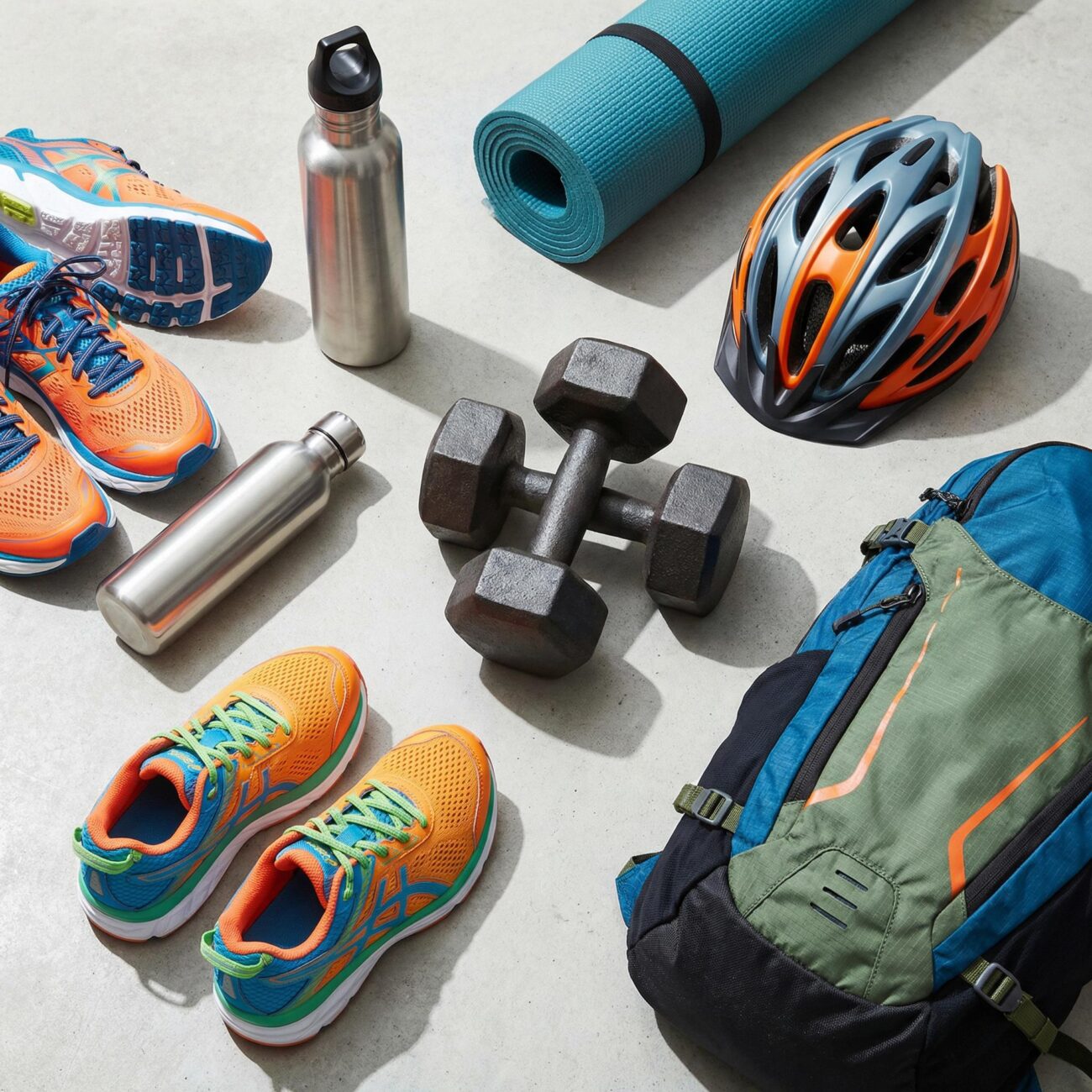
For many beginners, a basic setup can include:
- Yoga or exercise mat — useful for floor exercises and stretching
- Resistance bands — compact and versatile
- Dumbbells — useful for strength exercises
- Skipping rope — simple cardio equipment
- Foam roller — useful for mobility and recovery routines
As your training develops, you can add equipment that matches your specific goals.
Common Mistakes to Avoid
Avoid these mistakes when building a home gym:
- Buying equipment without a clear fitness goal
- Buying too much equipment at once
- Choosing equipment that doesn’t fit your space
- Ignoring weight limits
- Choosing only based on price
- Forgetting storage requirements
- Buying equipment you aren’t likely to use regularly
Gym Equipment Buying Checklist
Before purchasing, check:
- ✅ Fitness goal
- ✅ Available space
- ✅ Equipment size
- ✅ Weight capacity
- ✅ Build quality
- ✅ Safety features
- ✅ Storage
- ✅ Warranty
- ✅ Return policy
- ✅ Current price
Frequently Asked Questions
What gym equipment should beginners buy first?
Start with versatile equipment such as a mat, resistance bands, dumbbells, and a skipping rope. Add larger equipment after you establish a consistent routine.
Are adjustable dumbbells worth buying?
They can be useful if you want multiple resistance levels while saving storage space.
Do I need a treadmill for a home gym?
Not necessarily. If space or budget is limited, simpler cardio equipment such as a skipping rope or other suitable equipment may be enough for your routine.
How much space do I need for a home gym?
It depends on the equipment you choose. Measure your available area and allow enough room to use the equipment safely.
Is expensive gym equipment better?
Not always. Compare quality, durability, features, warranty, and suitability for your goals rather than price alone.
Final Verdict
The best home gym is not the one with the most equipment. It is the one that contains equipment you will actually use consistently.
Start with your fitness goal, choose versatile equipment, consider your available space, and compare quality and prices before purchasing.

Leave a comment